


Communities, Participation and Technology
By: T. B. Dinesh (India)
Learn about the Project
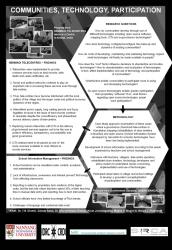
The aim of this project is to analyse and conceptualize what community participation means in the context of technology, and how technology facilitates/debilitates the interactions within the communities in different contexts. The project is premised on the grounds that the creation of software technology or a platform for a community/institution is not the end, but the start of a process. We therefore seek to examine how community participation in the development and use of technology can take place when the community in involved in defining and constructing the technology and its standards, and is imbricated in its evolution.
This proposition simultaneously poses questions concerning:
- Scale – as the community/institution grows and becomes large, how will these large numbers of people become involved in the definition, construction, use and development of the technology, thereby in the overall process of participation? Is participation in the manner conceived in this project hindered at large scale? What meaning do participation and technology take on at larger scales?
- Security – if several people are going to be involved in using the technology as well as participate in its continuous development, what kind issues regarding tampering of the system and the data hosted on it will influence participation?
- Presence of diverse groups – a community/organization is not a homogenous entity. It comprises of individuals hailing from different socioeconomic and ethnic backgrounds. How does this diversity then influence the process of participation and the use, the definition and the development of the technology?
This project will take into account the above issues in examining participation and technology. The other questions that will be considered and examined in the research are:
- How does participation in the development and use of technology open up organizations and communities, and enable information flows and interactions between people and the various authorities?
- How do the contexts, in which such technologies are conceived, influence their application and use?
- What are the aspects of technology and participation that enhance interactions and that compare to the ways open source communities which are technologically savvy have demonstrated? What is the relevance of open source itself to participation?
- Can we observe some of the capabilities that allow communities to take ownership of the technology and modify the technology as well as the nature and manner of participation from time to time?
Findings
School Information Management System:
The school information management system project ended last year with the report that emphasizes the need to let teachers indulge in developing the requirements for an information management system for their schools. The report also indicates how the comfort with computers and the earlier opportunity for teachers to have a say in their information management system needs have turned a private school into being proactive in developing their own modules compared to attempts of computerization efforts by government that targets their own need to compile period reports from the schools. Language and contextual representation of information and data will be of key importance in managing information for school communities.
Nemmadi Kendras (NKs)
Drawing on the social shaping of technology perspectives, the findings suggest that a thorough analysis of the impact of information technologies in governance necessitates paying attention to the larger political and social processes within which the technology is introduced and embedded. The introduction of information technologies in a fraught and contested context adds more layers (in terms of bureaucracy and middlemen), which rural citizens have to navigate before they can actually attain services. Concerns related to costs, scale and political dynamics in the design of databases are also investigated. The report concludes by advocating the ‘embedded’ approach for studying the role of ICTs in governance.
PI’s Current Progress (To be made available soon)
Video clip of T. B. Dinesh sharing his experience with SIRCA Programme. *This video is made together with another Principal Investigator M.J.R. David (Sri Lanka)