
PI Baohua Zhou Presenting at the 65th WAPOR Annual Conference
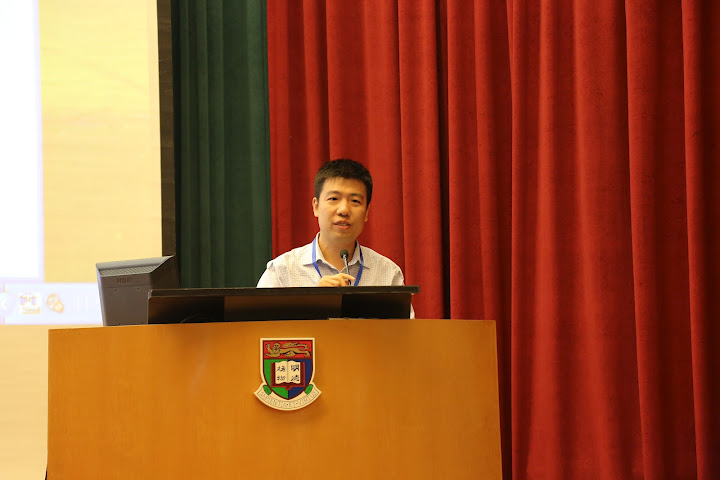 SIRCA II PI and associate professor of Fudan University Dr. Baohua Zhou presented a paper at the 65th Annual Conference of the World Association for Public Opinion Research (WAPOR), which was held in Hong Kong, June 14-16, 2012. This paper, titled with “New Media and Opinion Expression of Information Have-less in China: An Empirical Study of Migrant Workers”, was a recent outcome of Dr. Zhou’s ongoing SIRCA II project “ICTs and Empowerment among New Generation Migrant Workers in China”.
In this paper, Dr. Zhou analyzed the representative survey data on Shanghai migrant workers he collected before and reported the main findings concerning the relationship between ICTs and expressive intentions among new generation migrant workers. Specifically the paper proposed two research questions: what is the pattern of expressive intention among migrant workers, when they are faced with actual problems and what are the factors influencing their expressive intentions. To answer these questions, the paper focused on two major actual problems facing the new generation migrant workers in China: labor rights protection and personal emotion problems. It also differentiated three types of channels for their expression: interpersonal face-to-face channels (such as discussing with family members, relatives and friends, workmates and hometown fellows), new media channels (such as making comments on online forums or communities, posting on blogs, chatting on QQ/MSN, and posting on QQ group/MSN group), and institutional channels (such as commenting to newspaper, radio or TV station, to the boss, to labor union or Youth League, to relevant government agencies, and to relevant social organizations).
The results showed that the new media had become the second ranked channel for new generation migrant workers to express their voices when being faced with actual problems, just following the interpersonal channels. The likelihood of expression was higher for labor problems than emotional problems. Furthermore, the regression analysis showed that the online news use and online social networking both had a significant independent influence on the expressive intention through new media channels. Online social networking also had an independent influence on expressive intention through interpersonal and institutional channels. These findings actually showed some empowerment potential of ICTs for individuals’ expression among new generation migrant workers.

Singapore Internet Research Centre
Wee Kim Wee School of Communication and Information
Nanyang Technological University
31 Nanyang Link
Singapore 637718
Tel: (65) 6908-3445
Fax: (65) 6792-7526
Email: sirca@ntu.edu.sg

This Post Has 0 Comments